

Browse by Subject
- Applied and Industrial Physics
- Applied Mechanics and Fluid Dynamics
- Astronomy and Astrophysics
- Atomic and Molecular Physics
- Biophysics
- Chemical Physics
- Computational Physics
- Condensed Matter and Materials Science
- Electromagnetics
- Electronic Materials and Devices
- Energy and Environmental Physics
- General and Introductory Physics
- Geophysics
- History of Physics
- Lasers, Optics and Photonics
- Mathematical Physics
- Medical Physics
- Nonlinear Physics
- Nuclear Physics
- Particle/High Energy Physics
- Popular Interest
- Plasma Physics
- Quantum Physics
- Sensor Science and Technology
- Statistical Physics and Thermodynamics
- Tools and Methods
- Waves and Wave Phenomena
Latest News



Coming Soon
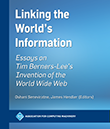
When Sir Tim Berners-Lee first proposed the foundations of the World Wide Web at CERN in 1989, his manager called it “vague, but exciting…
Read More
Newsletter